









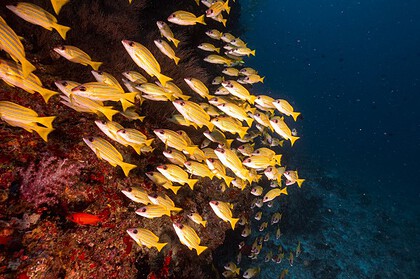


Where history and coral collide
Egypt’s Red Sea is one of the world’s premier diving destinations, not only for its vivid coral reefs and year-round warm water, but also for its extraordinary concentration of shipwrecks. Stretching from Sharm El Sheikh to Safaga, these steel skeletons tell stories of war, trade, and tragedy—each one now transformed into a vibrant reef teeming with life.
The Red Sea’s excellent visibility, accessible depths, and wide variety of wreck types make it a dream for recreational divers and underwater history buffs alike. Whether you’re interested in WWII history, big wreck penetrations, or shallow, coral-covered classics, these eight unforgettable wrecks represent the very best of Egypt’s underwater graveyard.
SS Thistlegorm – Sha’ab Ali


No list of Egyptian wrecks is complete without the SS Thistlegorm. Located near Sha’ab Ali in the Strait of Gubal, the SS Thistlegorm is the Red Sea’s most famous wreck. This British WWII cargo ship was sunk in 1941 by German bombers while transporting military supplies to North Africa.
Resting upright at 50 to 100 feet (15–30 m), it lies in an area known for strong currents. Visibility is typically excellent (up to 100 feet/30 m), and the site is best accessed from Sharm El Sheikh or as part of a northern Red Sea liveaboard itinerary.
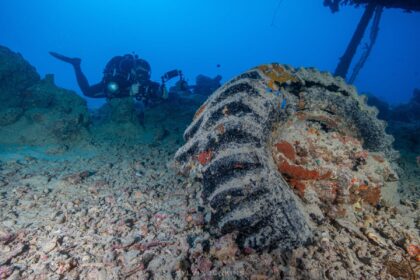
Inside the Thistlegorm’s cavernous holds lie an astonishing array of near-perfect preserved war cargo: trucks, motorcycles, rifles, airplane parts—even two steam locomotives that were blown off the deck in the explosion.
The decks are now shrouded in soft corals, and the wreck attracts large schools of snapper, batfish, and trevallies. Divers often spot crocodilefish, nudibranchs, and barracuda. It’s one of the few wrecks in the world where history, marine life, and sheer scale collide so spectacularly.
Depth: 49–98 feet (15–30 meters)
Skill level: Intermediate to advanced
Access: Boat or liveaboard
MV Giannis D – Abu Nuhas Reef


The Giannis D, a Greek cargo ship, sank in 1983 after crashing into Abu Nuhas Reef—an infamous wreck trap northwest of Hurghada. The ship lies at a dramatic angle on its port side, split in two but largely intact, at a depth of 40 to 100 feet (12–30m).
Visibility is typically around 65 feet (20 m), and currents can range from mild to moderate. It’s a wreck that combines structure with surrounding reef, and is one of the area’s most popular boat dives.
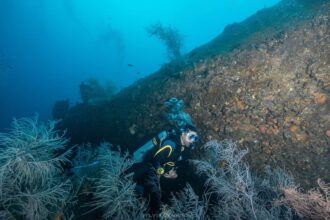
Inside, the tilted engine room and galley offer fascinating penetration opportunities. Dense schools of glassfish shimmer in the shadows, while lionfish and moray eels prowl the wreckage. Coral growth clings to the superstructure, attracting jacks and occasional turtles. This photogenic site is ideal for intermediate divers and underwater photographers looking to capture wreck geometry and life in one frame.
Depth: 39–98 feet (12–30 meters)
Skill level: Intermediate
Access: Boat or liveaboard
SS Carnatic – Abu Nuhas Reef


One of the oldest wrecks in the region, the Carnatic was a P&O steamship that struck Abu Nuhas Reef in 1869 while en route to India. It now lies in two sections between 65 and 90 feet (20 and 27 m), with its elegant iron hull and timber beams still visible. Because it was carrying crates of wine when it went down, it’s often called the “wine wreck.” The site is calm and often used for training wreck dives, thanks to excellent visibility and minimal current.
The Carnatic’s skeleton has been overtaken by colorful hard and soft coral, creating a haven for smaller reef fish. Expect to see schools of anthias, butterflyfish, parrotfish, and the occasional moray eel tucked into the beams. The open framework allows easy exploration, and its shallower depth makes it perfect for long, leisurely dives with plenty of natural light streaming through.
Depth: 66–89 feet (20–27 meters)
Skill level: Beginner to intermediate
Access: Boat or liveaboard
Chrisoula K – Abu Nuhas Reef


Known as the “tile wreck,” the Chrisoula K was a Greek freighter that sank in 1981 while transporting Italian ceramic floor tiles. The cargo still lines the open holds, which rest upright at 82 feet (25 m). Like its reef neighbors, it lies just below the surface at Abu Nuhas, where multiple vessels have fallen victim to the shallow coral heads. With mild currents and clear water, this site is a staple on liveaboard itineraries.
The wide cargo bays and intact superstructure make for easy swim-throughs, and the marine life is rich. Look for batfish, glassfish, scorpionfish, and hunting trevallies weaving in and out of the structure. Bright red sponges and small clumps of coral add color to the steel walls, and tile stacks create eerie, patterned seafloor landscapes.
Depth: 79–85 feet (24–26 meters)
Skill level: Intermediate
Access: Boat or liveaboard
SS Rosalie Moller – Gubal Island
Often overshadowed by the Thistlegorm, the Rosalie Moller was another WWII British cargo ship, sunk just two days later by the same German squadron. It lies deep from 115 to 165 feet (30-50m), upright and largely intact in the channel near Gubal Island. Because of its depth and often reduced visibility, the Rosalie is recommended only for experienced technical divers.
Though less visited, the Rosalie offers an atmospheric and rewarding dive. Grouper, lionfish, and jacks cruise the deck, and glassfish cluster in the holds. The hull is cloaked in black coral and whip corals, giving the wreck a shadowy, dramatic quality. Many divers consider it one of the most “complete” wrecks in Egypt—quiet, eerie, and undeniably powerful.
Depth: 115–164 feet (35–50 meters)
Skill level: Advanced/technical
Access: Boat or liveaboard
SS Dunraven – Ras Mohammed


The Dunraven was a British steamship that sank in 1876 after striking the reef near Beacon Rock in Ras Mohammed National Park. It now lies inverted on the seabed at a depth of 50 to 100 feet (15 to 30 m), with its iron frame forming wide arches and photogenic swim-throughs. Ras Mohammed is a protected area, so marine life is well-managed, and visibility is typically excellent.
Though smaller than others on this list, the Dunraven is rich in detail. Divers often spot nudibranchs, frogfish, and lionfish nestled into the rusted framework, while blue-spotted stingrays and scorpionfish patrol the sand. The wreck is overgrown with coral and sponges, and the interior is well-lit by shafts of light filtering through gaps in the hull.
Depth: 49–98 feet (15–30 meters)
Skill level: Beginner to intermediate
Access: Boat or liveaboard
MV Salem Express – Safaga


The Salem Express was a passenger ferry that tragically sank during a storm in 1991 after hitting the Hyndman Reef near Safaga. The disaster claimed approximately 470 lives, and the wreck now rests on its starboard side. Its sheer size and preserved details make it a striking dive, though many divers choose not to penetrate the interior out of respect.
Despite the tragedy, the wreck is now home to growing coral colonies and marine life. Lionfish hover along the railing, snapper patrol the upper decks, and large moray eels curl in broken corners. Divers should treat this site with sensitivity—it’s less a playground and more a place for reflection and remembrance.
Depth: 36–105 feet (11–32 meters)
Skill level: All levels
Access: Boat or liveaboard
SS Ulysses – Gubal Island
The Ulysses is one of the Red Sea’s oldest wrecks, having gone down in 1887 while transporting cargo to India. Resting at a depth of 16 to 90 feet (5 to 28 m) on the edge of Gubal Island, it’s an excellent shallow wreck dive that suits newer divers or those looking for a long bottom time. Calm conditions and good visibility (65+ feet/20+ meters) make it a relaxing and rewarding experience.
The wreck is heavily encrusted in coral, and schools of anthias, sweepers, and wrasse dance around its framework. Sea slugs and flatworms add macro interest, while turtles are occasional visitors. The Ulysses is often overlooked, but it offers classic wreck exploration with just enough coral and critters to make it memorable.
Depth: 16–92 feet (5–28 meters)
Skill level: Beginner to intermediate
Access: Boat or liveaboard
About Egypt

Egypt’s Red Sea coast stretches from the Sinai Peninsula down to the Sudanese border, offering easy access to world-class diving from popular hubs like Sharm El Sheikh, Hurghada, Marsa Alam, and Safaga. Whether you’re diving from a luxurious liveaboard or a laid-back beach resort, you’ll find well-equipped dive centers, experienced guides, and sites to suit every skill level.
The best time to dive in Egypt is from March to May and September to November, when sea conditions are calm and visibility is at its peak. Summer months are also diveable, though topside temperatures can soar. Winter brings cooler waters and occasional choppy seas, but fewer crowds.
Outside of diving, Egypt offers unforgettable cultural adventures. Take a Nile cruise to see the temples of Luxor; explore Cairo’s ancient wonders; or venture into the Sinai desert for camel rides, stargazing, and Bedouin dinners. The Red Sea is a place where you can spend the morning diving with turtles and the afternoon standing in the shadow of the pyramids—few destinations combine history and ocean adventure quite like Egypt.
 Take a moment to look at this.